Daily Save for 5/24/25
This is the primary purpose of this blog: to have a running diary of what I play, even if it's just me challenging someone I encounter on the street to a game of Rock, Paper, Scissors. It's a game, it was played, let's put it to words.
Rogue Legacy 2
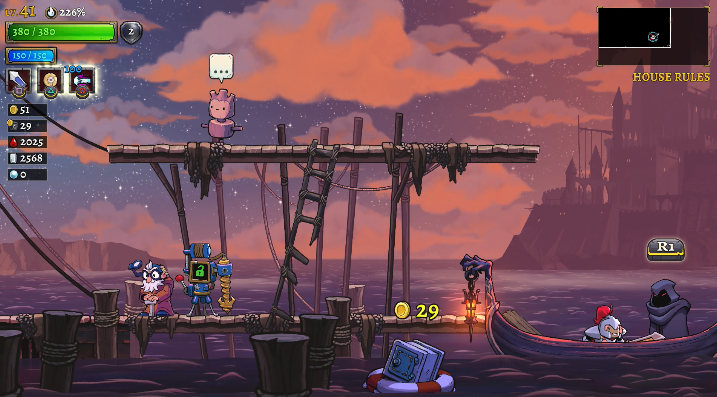
PS Extra—which is the Game Pass for PlayStation—has a monthly removal of games. This month, Rogue Legacy 2 is leaving, and that puts me on a slight time restraint. The only issue is I'm unsure if I like the game enough to rush it, but I still like it enough that I want to finish it. So I ended up just grabbing the game on sale for $10.
I adored the first game, but for some reason, the second game just feels off? The hitboxes seem weirder, the game feels less random and more forced in its layout structure. There is an ever-growing focus on limiting your progress until you obtain certain abilities, and the game feels like it’s swaying more Metroidvania than rogue.
I do like the new classes, but overall it's hard to feel too committed to any run when they last so much shorter than runs from the first game.
Tokyo Mirage Sessions #FE
As a big fan of both Fire Emblem and Persona, each time I make progress in this game I feel like I am going slightly more mad. It is both a collection of ideas that should mix well but somehow result like oil and water. In this session, I ended up finishing Chapter 3's intermission, which meant side quests.
I love me some side quests. They have an ability to really expand the world, the relationships between characters, and overall break up the monotony of the regular formula the game goes by. In Tokyo Mirage Sessions, these side quests usually involve getting your party members and support staff through a small issue or something they want—like a collectible or to pet a cat. While I do get to know these characters better, I still think it feels disconnected.
If you compare what Joker may go through in a side quest in Persona 5, he is usually interacting or reacting to the characters and world. There are dialog choices that he may not say with a voice actor attached, but he certainly interacts with the world around him. The main character, Itsuki Aoi—a name I actually had to Google since this guy is so void of personality—just mainly stands there during cutscenes or, if tasked to get something, just wanders through the world being reacted at instead of to.
The most personality he gets to show off in the 35 hours I've played so far is describing the taste of a Honey Chocolate Nutty Coconut Donut to Tiki, your fusion hub–made NPC demon spirit that can't physically interact with the real world. It is in these brief glimpses that you almost forget this guy has basically just been tagging along with the real protag (but actually deemed secondary character) Tsubasa and saying "Yes" a lot.
The best benefit of the side stories is that you get this in-battle power-up for them, where a character randomly replaces the chosen attack you picked with a free ultimate that hits all enemies for massive damage. The farther you get in the game, the more of these you do and the more chances you have for freebies. Which is great, as the fights are incredibly tough—the AI knows how to stack Sessions on you. Sessions are the main driver of the gameplay here and reward players for hitting weaknesses with your party chaining attacks together. So, oftentimes a good party arrangement can mean 3 hits for the price of 1. Unfortunately, the AI can do this too, and because they can get up to 6 enemies in a battle, that means you can sometimes get slammed for 6 attacks in one turn—and you're dead.
I didn't get far past this point, as Chapter 4 focuses on a dungeon with a mechanic I haven't grasped yet. Then I unlocked "weapon creating +", which either is a way to unlock more skills or power up ones I have. I was way too exhausted to figure that out and hit pause.